50 questions to ask your parents about their life
Not a generic list. The specific, gentle questions that actually open a parent up, grouped by topic, with notes on when to push and when to let the silence do the work.
Updated 25 July 2026
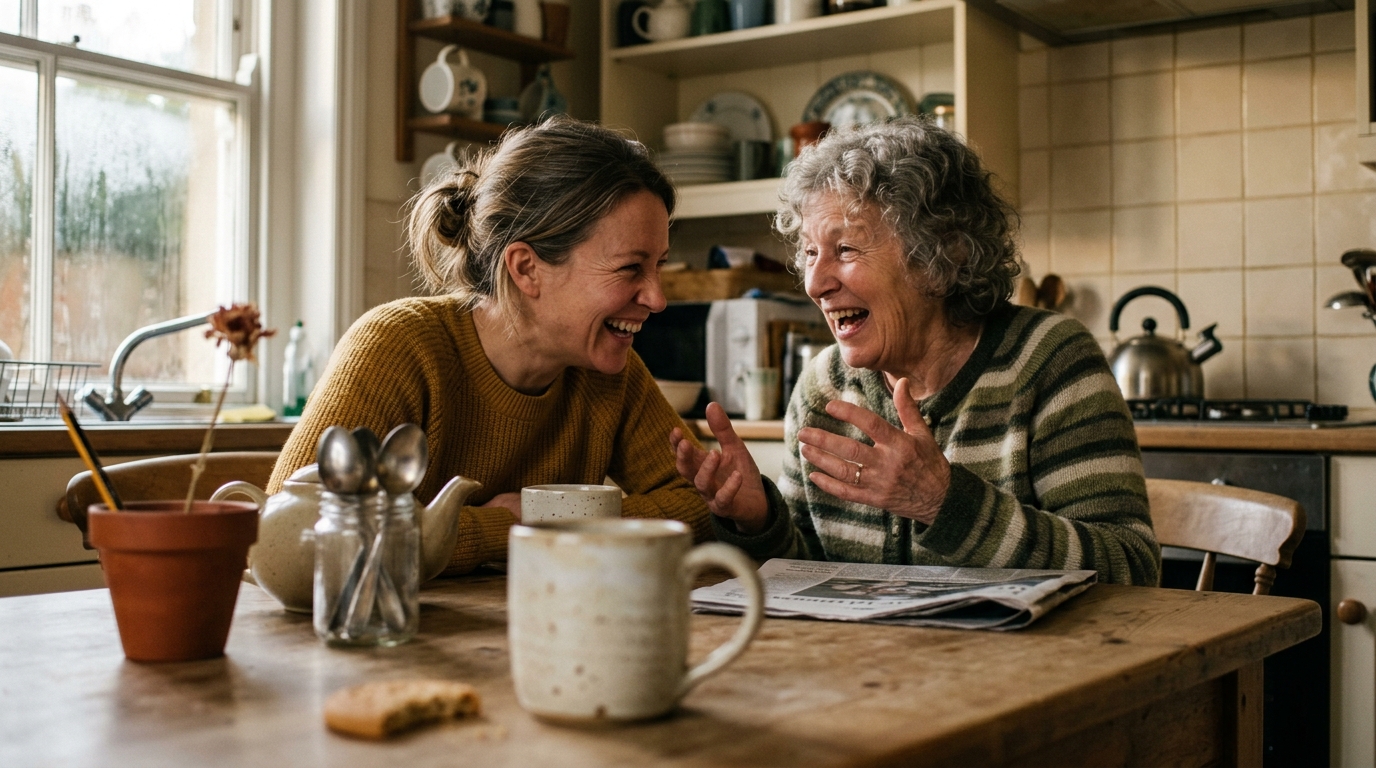
Ask open questions that reach back and stay specific. Start warm with childhood and daily life, then move to family, work, love, and what they want you to know. Ask one, then stay quiet. Pick five or six from the list below rather than working through all fifty in one sitting.
How to use this list
Do not ask all fifty. Pick five or six that feel right for your parent. Start with the warm-up questions about childhood and daily life before you move to the weightier ones about regret, identity, and what they want you to know. If your parent speaks another language at home, record them in it. There is a note on that in the questions people ask.
Childhood and early life
These are the gentlest way in. Most parents will talk about childhood without much prompting, because it is distant enough to feel safe.
- What is the first home you can picture? The rooms, the light, the sounds.
- What did you eat for breakfast as a child? Food unlocks whole worlds: the kitchen, who cooked, what they could afford.
- Who was your best friend before you were ten? What did you do together?
- What was your walk to school like? What did you pass, and who did you walk with?
- What did your parents do for work? What did you understand about it at the time?
- What was the first song you fell in love with?
- Was there a meal your mum or dad always made? Can you describe the smell?
- What got you into trouble as a child, and what was the punishment?
Family and home
These ask about the family your parent grew up in, not the one they made with you. That distinction matters. It lets them talk about their own parents as people.
- What was your mother like when she was angry? And when she was happy?
- What is something your father always said? A phrase, a piece of advice, a warning.
- Were there things your family never talked about? You do not have to say what. Just whether those silences were there.
- Did your parents argue? What about?
- Who in the family do you take after most, and how?
- Was there a relative everyone worried about? What happened to them?
- What did your family do on Sundays? Or whichever day was the day of rest.
- Did you have a relative who told the best stories? What did they talk about?
School, work, and the world outside
- What was your first job? How much did you earn, and what did you spend it on?
- Was there a teacher who changed how you thought about something?
- When did you first feel like an adult? Not your age. The moment.
- What was the first big news event you remember understanding?
- Did you ever live somewhere that felt completely foreign? What made it foreign?
- What skill did you learn that you still use every day?
Love, partnership, and becoming a parent
These need more trust, so do not lead with them. If your parent is private about their relationship, start with the wedding-day question, which asks about a moment rather than a judgement, and see where they go.
- How did you and mum, or dad, first meet? What did you notice about them?
- When did you know this was the person?
- What was your wedding day actually like? Not the photographs. The feeling.
- What surprised you most about becoming a parent?
- Was there a moment when you thought "I cannot do this"? As a parent, a partner, a person.
- What did you want for us that you did not have?
Identity, place, and belonging
For a parent who moved countries, switched languages, or rebuilt a life somewhere new, these matter more than the genealogy.
- Why did you leave? The real reason, not the official one.
- What did you take with you? What actually fit in the suitcase?
- What do you miss about the place you came from? Not the country. The specific thing: a sound, a food, a time of day.
- Did you ever feel like you belonged here? When?
- What language do you think in? Has it changed?
- Is there a version of yourself that only exists in your first language?
- What do you want your grandchildren to know about where you came from?
Regret, resilience, and what they have learned
These are the heaviest. Some parents will welcome them and some will not, so read the room. If they deflect, let them, and come back another time.
- What is the hardest decision you ever made?
- Is there something you wish you had done differently?
- What are you most proud of? Not what you think the answer should be. What actually comes to mind.
- What frightened you most as a young parent?
- Did you ever feel stuck? What got you unstuck?
- What do you know now that you wish you had known at twenty?
- Is there something you have never told anyone? It is fine if there is. It is fine if you would rather not.
What they want you to know
These are the questions most people wish they had asked. Do not save them all for last. If your parent is tired, ask one of these in the first session.
- What do you want me to remember about you?
- Is there something you have been meaning to tell me?
- What is the funniest thing that ever happened to you?
- What would you say to your own parents if you could talk to them now?
- What is the best piece of advice anyone ever gave you?
- Is there a story you have told me before that you want on the record? The real version, with the details.
- What question have I never asked you that I should have?
- Is there anything else? Then wait. Silence is the best question.
Tips for getting started
Start with one question, not fifty. Pick the one that feels most natural. "What did you eat for breakfast as a child?" works for almost everyone.
Record the conversation. Your phone is good enough. Set it on the table between you, press record, and talk. Do not hold it like a microphone, because that turns a conversation into an interview. For the whole setup, see where to start: the first interview.
Do not correct them. If a date is wrong or the story contradicts what you know, let it be. You are recording their version, and that is the point.
Let them wander. The best stories come from the tangents. If they drift from the question, follow them.
It does not need to be perfect. The laughs, the pauses, the half-finished sentences are what make it real. A polished interview is a podcast. A real conversation is an inheritance.