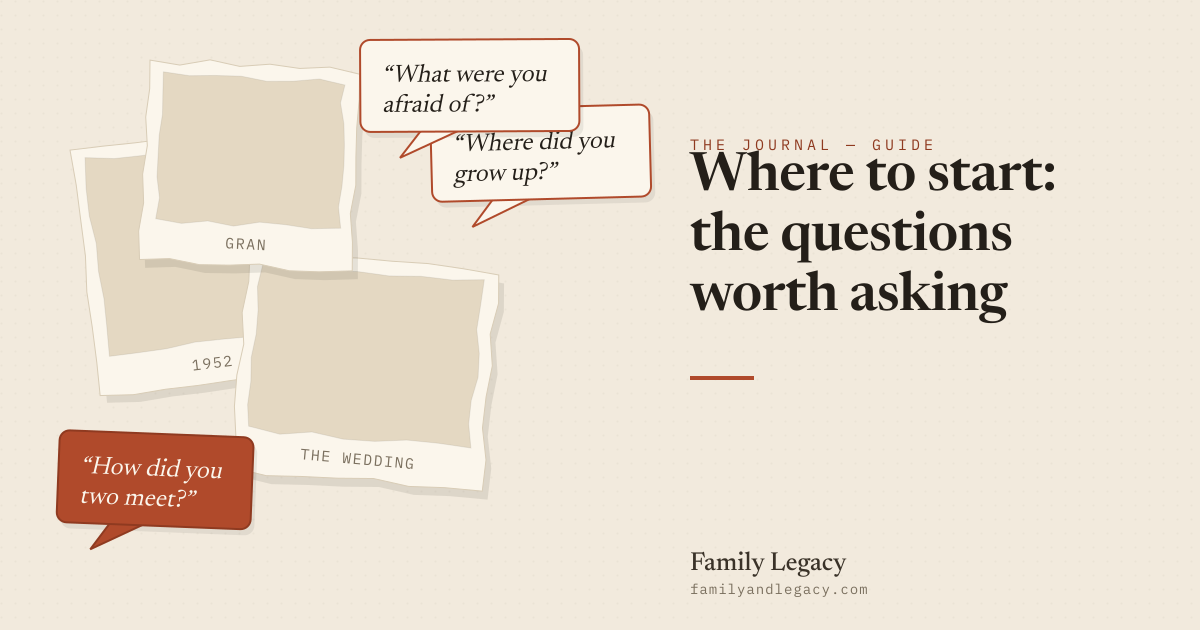
Where to start: the questions worth asking
There is a moment that comes to most of us somewhere in our fifties, usually at a kitchen table over a cup of tea, when a parent mentions in passing a place or a person you have never once heard them speak of, and you realise quite how much of their life has gone unasked. They are in their seventies now, perhaps their eighties or well beyond, still here and still telling their stories, and the whole of it is sitting there waiting for someone to be curious enough to ask.
So think of this as a gentle nudge to ask, while the asking is still yours to do. Not because anything is wrong, and not out of any kind of panic, but simply because a recorded afternoon of your father talking about the street he grew up on is the sort of thing you will be endlessly glad to have, and can never go back and make later.
You already have everything you need
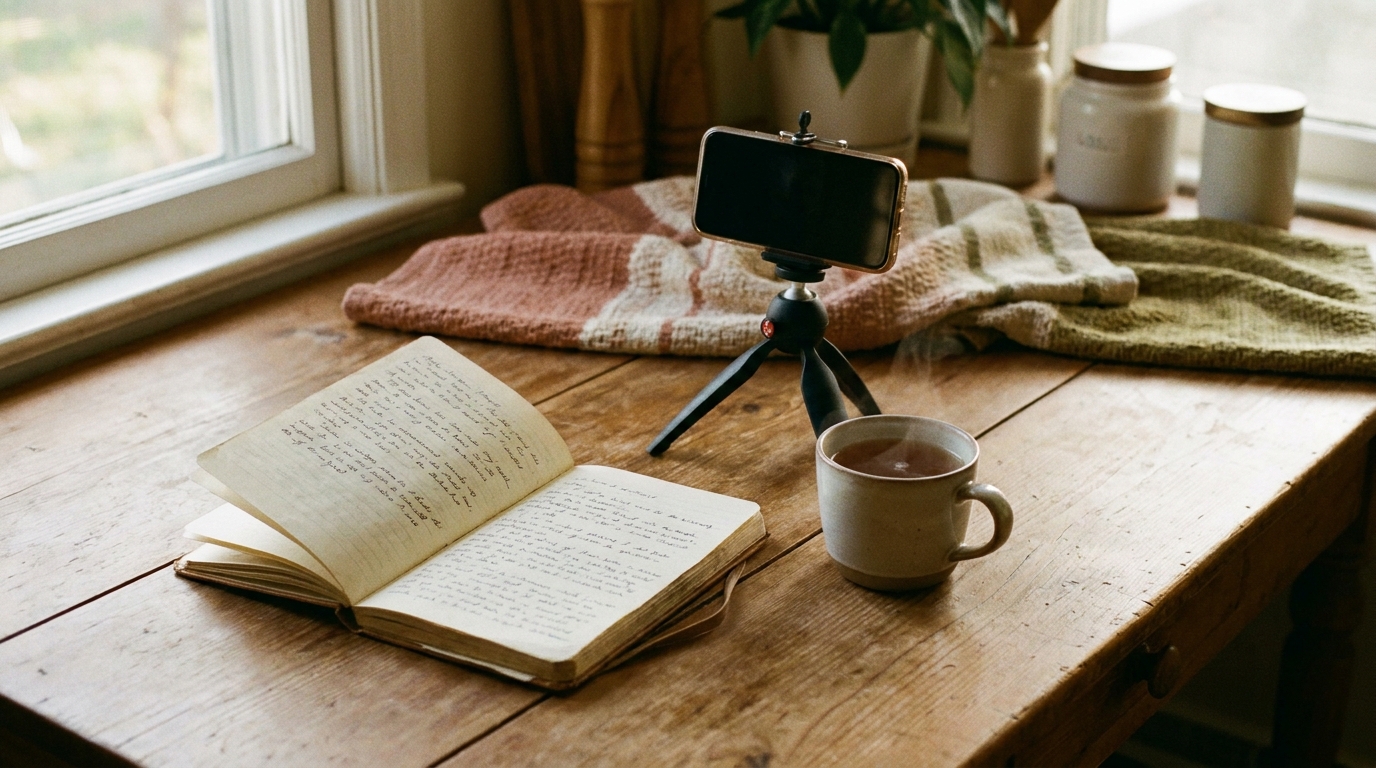
People put this off for years because they picture equipment and editing and some quiet expertise they are sure they do not have, and none of that turns out to be true. The phone already in your pocket records video far better than anything a television crew carried thirty years ago, and it really is the only thing you need. Sit your mum in her favourite chair by the window so the light falls softly on her face, prop the phone against a few books at eye level, press the red button, and simply start talking.
Getting the recording to us afterwards is just as gentle. We send you a link, you open it on the very same phone you filmed on, and the video travels straight from your hand up to your family’s archive without a cable or a computer anywhere in sight. You can forward that same link to your brother in another city or your daughter across the country, so they can record their own afternoon and add it in from wherever they happen to be. The recording is the part that matters, and everything after it is genuinely that simple.
The most important thing is what you ask
Here is the part that quietly decides whether a recording is worth watching in twenty years, and it has almost nothing to do with the camera. It is the questions you bring. A good question is warm and a little curious, the sort of thing that makes someone settle back in their chair and say “oh now, let me think about that”, and a whole rich afternoon can turn on a single one of them. You do not need a long list at all. You need a handful that open doors, and the patience to stay quiet afterwards and let the story find its own way out into the room.
If you only ever ask five things, ask these.
- Tell me about your grandparents. What were they like? This gently reaches back further than anyone else alive can take you, into a whole generation your own children will otherwise only ever know as names on a chart.
- What was your favourite place to play as a child? Ask it and watch them go straight back there, and the specifics come pouring out with them: the field behind the house, the den nobody knew about, the street full of children before the cars arrived.
- Which friends do you remember? The names they have not said aloud in fifty years, the ones who shaped who they became long before you ever came along.
- When did you meet that special someone, and what were your first impressions? Almost everyone has an answer to this one that they love to tell, and it is very often the warmest and the funniest part of the whole afternoon.
- What are you grateful for? A quiet question to end on, and frequently the one whose answer stays with you the longest afterwards.
Ask, then let the silence do the work
The only real skill in any of this is to ask your one question and then stop talking. The pause that follows can feel uncomfortably long, and every instinct will tell you to fill it or to nudge them along, but that pause is the exact place where the real answer is quietly gathering itself, so let it sit there and do its work. When something lands, a name or a sudden flicker of feeling, follow it softly with “what happened next?” or “what was he like?”, and you will find one story reaching back to pull the next one up behind it.
Keep it short, and come back for more
Half an hour is plenty for one sitting, and it is far kinder to record three unhurried afternoons over a few Sundays than to wear everyone out chasing a whole lifetime in a single go. It will not be tidy, and it is not meant to be. Someone will lose their thread completely, the phone will slip off its books, there will be laughter in all the wrong places and a long fond ramble about a neighbour you have never once heard of, and every bit of that should stay exactly where it is, because that ramble and that laugh are the very things that will sound like them when your family plays it back years from now.
Your mum or dad has spent an entire lifetime becoming the person now sitting across from you telling these stories, and for a good while longer they are still here to tell them. Put a Sunday afternoon aside, pour two cups of tea, bring one good question, and press record. You will be so glad that you did.
Record the conversation. We will do the rest, and keep it somewhere your family can always come back to.